Tea For Streets

The footprint is bigger than the building
The campus is the headline number: the acreage, the megawatts, the billions. The footprint is everything around it. Construction workforces in the hundreds or thousands, 24 hour truck traffic, temporary housing, and the service economy that follows a payroll. Storey County's own leadership describes what is happening there as hypergrowth, with residents already at planning hearings over nighttime construction traffic and noise.
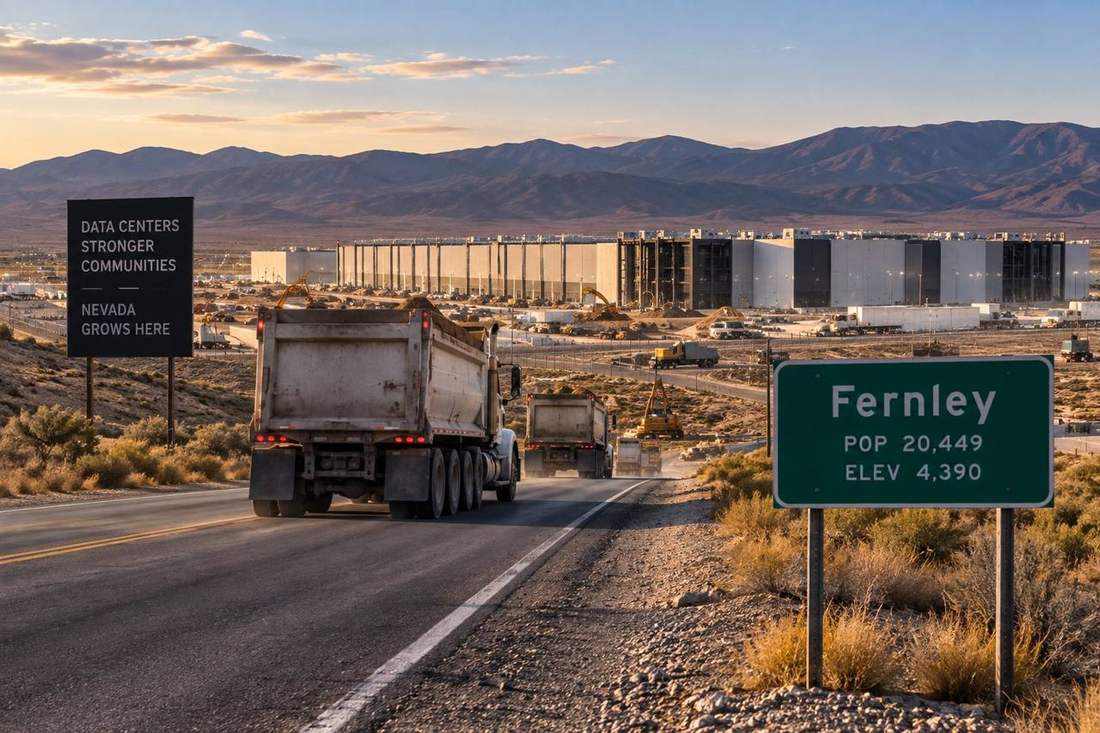
The infrastructure that degrades first isn't the substation. It's the pavement, the shoulders, the drainage: the things nobody puts in a press release and everybody drives on. In a rural county, the jurisdiction responsible for all of it may run on a six person crew and a budget written before anyone nearby had said the word hyperscale.
The labor follows the load, and the streets follow the labor
Data centers bring construction crews, then operations staff, then the economy that serves them. That is real estate demand in places that never had it, which is why PropTech now matters in Fernley and not just Phoenix. This is where PropTech and GovTech stop being separate industries: the developer's site selection model and the county's road maintenance budget are describing the same square miles.
Every one of those new residents is a resident of a town. Whether they stay, whether the growth compounds or churns, comes down to whether the place works day to day: streets, lighting, drainage, the everyday conditions people report to their local government. Great streets aren't a metro problem. They're a growth absorption problem, and growth is going rural.
Taylor said yes. Nevada is saying slow down.
This September, the city council in Taylor, Texas voted unanimously to annex and rezone 220 acres for a $2.5 billion, six building data center campus beside Samsung's 1,200 acre chip plant, in front of a council chamber filled with residents worried about utility bills and transparency, as reported by the Austin American-Statesman. The same reporting tracks more than 70 data centers operating or planned between Austin and San Antonio, and notes that residents in San Marcos and College Station persuaded their councils to say no this year.
Taylor's deal is projected to bring the city more than $145.9 million in taxes and utilities and more than $70.7 million to its school district over ten years, on the back of roughly 3,000 construction jobs and 360 permanent ones. The farm to market road serving the corridor is being widened into a six lane thoroughfare past the high school. All of that is real value. All of it also lands, physically, on streets and intersections that a city that was small before Samsung arrived now has to keep working.
Nevada is running the other half of the experiment. In 2026, Reno enacted the state's first moratorium on new data centers and Nye County's water district followed with an emergency ban, while Clark County and other jurisdictions rewrite their development rules, per reporting from FOX5 Las Vegas and the Nevada Current. The moratoriums aren't anti growth. They're a signal that local governments can't yet measure what the growth costs them, or prove what the community got in return.
The accountability gap is the real opportunity
Small jurisdictions absorbing data center growth are starting to receive real money for it: impact fees, community benefit agreements, tax abatement clawbacks, revenue sharing like Taylor's. What most of them lack is the ability to show, block by block, whether that money produced a better street.
GovTech go to market strategist John Kitsmiller of energizeGTM, who first pointed us to the Taylor story, frames the stakes in a way we keep coming back to: a government decision is ultimately defended to voters, not to a spreadsheet. That holds for purchases and it holds for approvals. The council that said yes to the campus needs to show the town what it got, in terms a resident can see from the driver's seat.
That is the missing layer, and it is the one we build at Tea For Streets: structured, human verified street condition data, captured on ordinary phones, measured rather than eyeballed, and tracked to outcomes. For a city manager, it is the difference between saying the impact fees were spent and showing the road segments that improved, with before and after records. Voters don't see the interconnection queue. They see the sidewalk.
What this looks like in practice
- Baseline before the boom. Scan the corridors around a proposed site, the pavement, shoulders, drainage, and signage, so degradation from construction traffic is measurable against a record instead of memory.
- Monitor during construction. The same capture, repeated, turns "the trucks are destroying our roads" from a complaint into a dataset a community benefit agreement can act on.
- Verify after the money moves. When impact fees fund repairs, verify the outcomes the same way, so the council meeting has receipts, not adjectives.
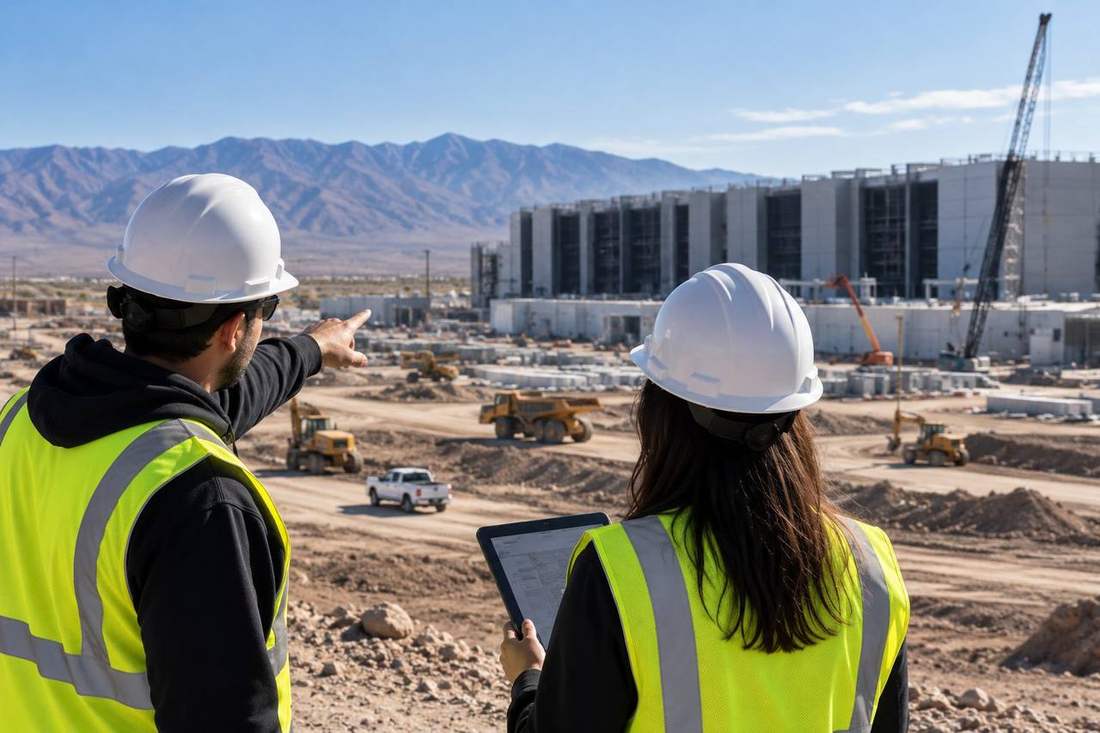
None of this requires new hardware in the ground. It requires the place to be observed, honestly and repeatedly, and the results made public. Observation, not surveillance: conditions, never people.