Tea For Streets

Why this status exists
Every MyLA311 service request ends in a terminal status. In the City's own data, "Closed" means the request "has been completed": completed as a case, not necessarily as a repair. "Closed - See Comments" is the version where the closing department attached an explanation. A closed case is a counted case either way, which is why a street can stay broken while the paperwork reads done.
We say this without blame: the crews are real, the workload is enormous, and many requests do end in real repairs. The failure here is a visibility failure. The system knows why your case closed, and you often can't see it.
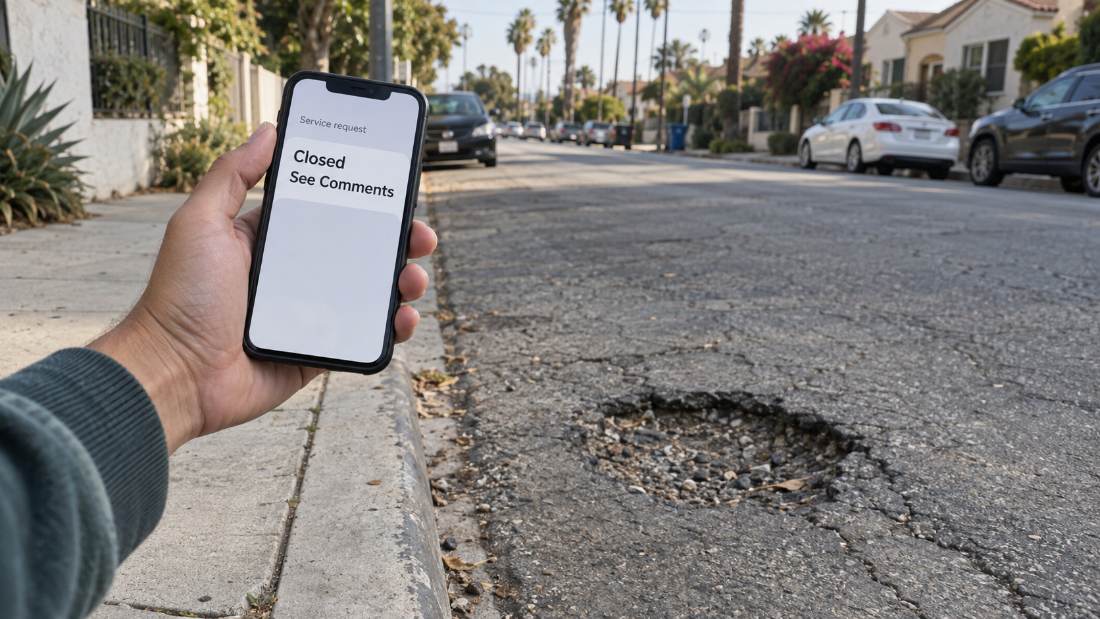
What to do when you see "Closed - See Comments"
- Look up the request on the MyLA311 website. Search for the service request and check the available status and resolution information. The City directs residents to the MyLA311 website to check the status of service requests, and you can follow a request to get email updates when it opens and when it closes.
- If the explanation still isn't clear, call 311 (or 213-473-3231), give the representative your service request number, and ask what information is available about why the request was closed.
- If the request was closed but the problem is still there, take a current photo and submit a new request. Include the previous request number and closure date in your description so there is a record of the earlier report.
- If the request was referred elsewhere, follow the information in the closure explanation. The City routes each request to the responsible department, and a referral means another agency owns the fix.
- If the issue keeps closing without resolution, contact your City Council district office and provide the relevant service request numbers and dates.
How CLARK AI handles it
CLARK AI files your report through 311 and then watches the case. When the city reports a terminal outcome, your tracker moves to Resolved, and we record what kind of closure it was, so "Asphalt repaired" and "Closed - See Comments" don't blur into one green checkmark. Over time, that tracked record of filings, outcomes, and closure types is what turns individual frustration into a picture cities and residents can both act on. It is the same discipline behind how we report a pothole: every case tracked to closure.