Tea For Streets


The short version
- Submissions measure demand; outcomes measure service. One cannot stand in for the other.
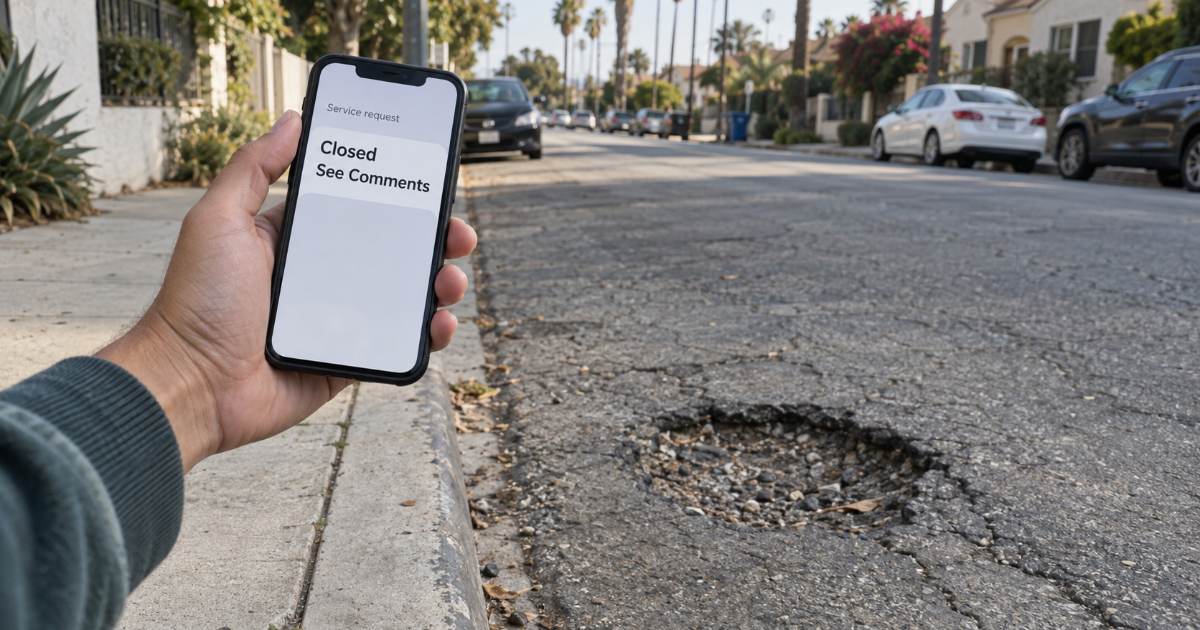
- A closure count is not an outcome record: closed can mean repaired, cancelled, duplicate, referred, or “see comments.”
- Outcome records also matter to risk management. Los Angeles budgeted $87 million for liability payouts in FY2025 and ultimately paid about $286 million. Those citywide payouts cover many kinds of claims, not just street conditions.
- Budgets are defended in public: “efficiency is an internal argument,” John Kitsmiller, energizeGTM.
What does a submission count actually measure?
Demand, and the friction of the channel. Los Angeles reported more than 2.165 million MyLA311 contacts across the mobile app, website, and call center in the 12 months preceding Executive Directive No. 5 in October 2023. That is a real, useful measure of contact volume, but it does not by itself say what happened after each service request was filed. Submissions can rise because conditions worsen, because access improves, or both. They can fall because conditions improve, because residents use another channel, or because people stop reporting.
A closure rate is one step better and still not a complete outcome record. MyLA311 cases can reach different terminal dispositions, including completed work, cancellation, duplicate handling, referral, or a closure accompanied by explanatory comments. A city-reported repair is useful evidence of an outcome, but it is still different from an independent return visit confirming that the physical condition is gone.
The City has explicitly recognized the need to measure what happens after intake. Executive Directive No. 5 says Los Angeles lacked a formal mechanism to ensure the effectiveness of MyLA311 services and calls for standardized customer-service measures and improved fulfillment information. The Controller's 2021 audit likewise recommended measuring service performance, providing estimated completion times, and proactively collecting customer feedback. See What does “Closed - See Comments” mean on a MyLA311 request?
What did tracking outcomes show in Los Angeles?
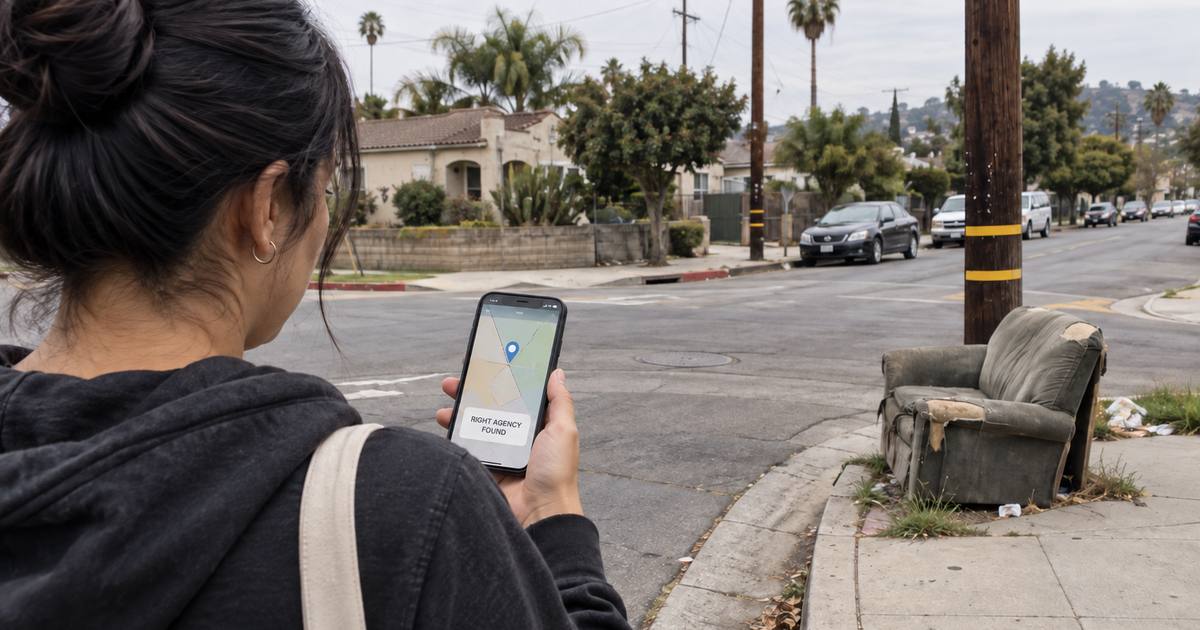
As of September 15, 2026, Tea For Streets had filed 91 cases through official 311 channels using CLARK AI. Counted as submissions: 91 filed, all accepted. Tracked as outcomes: a map of where the City's workflows exist. Eighty-four cases (92%) reached active city handling and 80 (88%) a city-reported terminal outcome, closed, cancelled, or duplicate, not independent on-site repair verification. Potholes are 40 of the 91 cases, 44 percent of what we filed; 36 are resolved (90%), with a median city closure of six days.
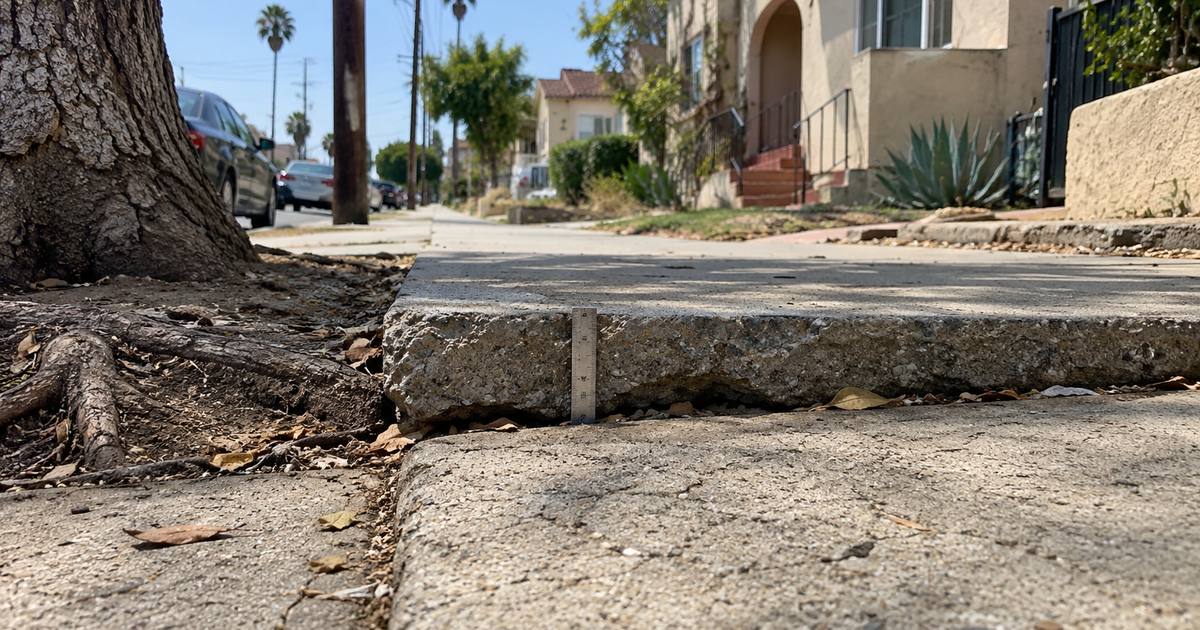
Sidewalks: five cases filed, zero resolved, all open past 18 days. Same system, same filing quality, entirely different outcome. The replies said “received and filed for future reference,” a place in a backlog, not a work order. Sidewalks belong to a different bureau, under a 30-year court settlement, with no completion service level. We can see it because we track outcomes, not submissions.
A council office can act on “92 percent reached active handling, five sidewalk cases stuck past 18 days,” not on “91 filed.”
What should an outcome record contain, and who needs it?
An outcome record holds six things:
- The condition as observed: photo, location, type, a measurement where possible, date, observer.
- The filing: the city's case reference, request type, jurisdiction, filing date.
- The handling: each city status change, timestamped.
- The closure: the terminal status, the disposition in words a resident can read, the date.
- Verification: a return visit to the same spot with a matching capture, dated, by someone other than whoever closed the ticket, resolved, not resolved, or unable to verify.
- Recurrence: a link to any later report at the same location.
Who needs it:
Risk managers. California Government Code §835 can impose liability for injury caused by a dangerous condition of public property when the statutory elements are met, including, in one path to liability, actual or constructive notice with sufficient time to take protective measures. A documented service request can therefore matter to the factual record around notice and response, although whether it establishes legal notice depends on the circumstances. Los Angeles budgeted $87 million for liability payouts in FY2025 and ultimately paid about $286 million citywide. Those payouts span many kinds of claims, including matters unrelated to streets, so they are context for the scale of municipal risk rather than a measure of the cost of 311 failures.
Department heads and elected officials. Govtech sales advisor John Kitsmiller of energizeGTM argues that internal efficiency alone is often not enough to defend a public budget decision; the case also has to connect to an outcome that can be explained to residents and elected officials. That is a useful test here: does the headline describe a citizen outcome, or only a process improvement? An outcome record gives a public works director a sentence to say out loud: what was reported, what reached active handling, how it closed, how long it took, and what was independently verified.
One rule keeps the record trustworthy: Tea For Streets publishes city outcome data under written neutrality rules, the same metrics for every district, no editorializing, advance notice, never suppression.